
Can You Eat Before a CT Scan? Expert Preparation Guidelines
Computed tomography (CT) and magnetic resonance imaging (MRI) are powerful diagnostic tools in modern healthcare, using X‑rays and computer processing to create detailed cross-sectional images of the body. Many patients naturally ask can you eat before a CT scan?
The MRI of breastfeeding mothers, in particular, raises unique considerations. While MRI itself does not use ionizing radiation and is generally safe for breastfeeding mothers, any contrast material used in the process may require special attention. It is important for breastfeeding patients to consult with their healthcare provider about the potential need for expressing and discarding breast milk for a short period following a contrast-enhanced MRI. Intedia’s radiology center provides all necessary instructions to ensure the safety and comfort of both mother and child during the imaging process.
The answer depends on the type of scan, whether iodinated contrast dye will be used, and the part of the body, such as the breast, being examined. This article explains when fasting is necessary and when normal food intake is permitted, based on hospital and radiology guidelines. Throughout, we emphasize how Intedia’s expert team ensures technical excellence and compassionate care. Each section reinforces that our radiology center in Tijuana provides clear instructions and supportive guidance to every patient.
Understanding CT and the Role of Preparation
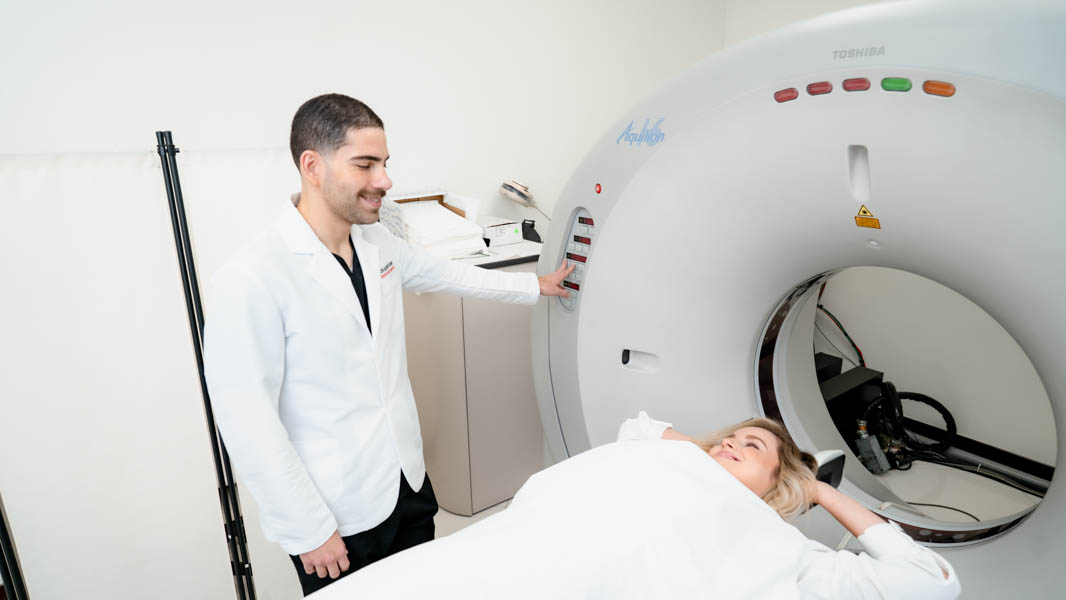
CT scans produce cross‑sectional images by rotating an X-ray source and detectors around your body, then reconstructing the data into slices. The scanner is a doughnut-shaped machine; most scans take only 5–15 minutes. Because CT uses ionizing radiation, you will be asked about pregnancy status and to remove jewelry or metal objects which could interfere with image quality. Unlike MRI, CT is safe for patients with metal implants (e.g. pacemakers or joint prosthetics), though metal may cause streak artifacts on the images, whereas an MRI of breastfeeding women requires special considerations to ensure safety and accuracy, including evaluating the compatibility of the breast implants. An intravenous (IV) line may be placed to administer contrast medium, such as iodinated contrast dye or gadolinium, which highlights blood vessels and organs, aiding in the detection and diagnosis of conditions like cancer. CT exams are overseen by board‑certified radiologists and technologists who ensure you remain still and comfortable during the scan. CT is much faster than MRI, so sedation is rarely needed; however, if you cannot lie still (for example, young children or very anxious patients), sedation or anesthesia can be arranged in special cases. These variables – contrast use, sedation, and exam type – determine what preparation is necessary before your CT scan.
Proper preparation promotes safety and optimal imaging. Fasting when required helps prevent vomiting (especially if sedation or certain contrasts are involved) and reduces the risk of aspiration. It can also improve visualization by ensuring an empty stomach or bowel when imaging abdominal organs. Preparation instructions allow the radiologist to see structures clearly on the first attempt, minimizing repeat scans. Intedia’s staff will provide personalized instructions before your appointment, but the following evidence-based guidelines offer a general framework on eating and drinking before a CT scan.
Mri of breastfeeding
For lactating patients, an MRI of breastfeeding can be an important diagnostic tool to assess breast health without the need for ionizing radiation. Breastfeeding individuals often wonder if imaging might impact milk supply or infant safety. MRI is considered safe and does not require the cessation of breastfeeding before or after the scan. Magnetic resonance imaging uses strong magnets and radio waves, which do not enter bodily fluids such as breast milk. As such, the procedure poses no risk to the breastfeeding child, ensuring that the mother can continue nourishing her infant without interruption or concern.
When Fasting Is Required
Sedation or anesthesia cases
Fasting is essential when sedation or general anesthesia is used for a CT scan, which is uncommon but sometimes necessary for young children or patients with extreme anxiety who cannot stay still. According to anesthesia fasting guidelines from the University Hospital of New Jersey, adult patients should avoid solid food for 8 hours and clear liquids for 4 hours before an exam involving anesthesia, and similar precautions apply to an MRI of breastfeeding mothers, who may have additional considerations to discuss with their healthcare provider. Children over 3 years follow the same rules as adults, while infants 6–36 months should have no solids for 6 hours (breastfeeding/formula allowed up to 6 hours prior). These strict restrictions reduce the risk of aspiration (inhaling stomach contents) during sedation. If your CT requires IV sedation or general anesthesia, you will also need to arrange for someone to drive you home afterward. Intedia’s technologists and anesthesiology partners closely monitor breathing and heart rate throughout sedated CT procedures to ensure your safety at all times.
Abdominal and pelvic CT scans with contrast
Exams involving the digestive organs often require more stringent fasting because food or fluid in the stomach/intestines can obscure anatomy and increase discomfort during the scan. If your CT scan will use IV contrast or oral contrast for abdominal or pelvic imaging, you will likely be instructed to stop eating for a period before the test. Many centers advise no food or drink for 4 hours before a contrast-enhanced CT. For example, UPMC’s patient guidelines state: “Do not eat or drink for four hours before your CT scan” when contrast dye is involved. This reduces the chances of nausea during the injection and improves image clarity in the abdomen. In the case of oral contrast (a flavored barium or iodine solution you drink to outline the GI tract), you may be asked to follow a specific regimen: the University of Utah advises patients not to consume anything for 3 hours prior, then to drink the oral contrast in divided doses starting about 1.5 hours before the scan. For certain specialized GI studies like CT enterography or colonography, a longer fasting period and bowel prep (laxatives or enemas) may be required – sometimes no solid food after the prior midnight, similar to preparing for a colonoscopy. Intedia will provide these instructions in advance if applicable. Adhering to the fasting guidelines for abdominal and pelvic CTs ensures the stomach and bowels are relatively empty, yielding clearer images of organs like the liver, pancreas, intestines, uterus or ovaries, and it minimizes the risk of discomfort or vomiting from the contrast.
Optimizing image quality with special restrictions
Brief fasting or dietary restrictions can improve image quality for certain CT studies even when sedation isn’t used. For instance, cardiac CT scans (such as coronary calcium scoring, MRI, or CT angiography of the heart) often require avoiding caffeine and sometimes fasting for a few hours beforehand. Caffeine can raise heart rate and blood pressure, which is why doctors typically recommend no caffeine for 12–24 hours before a cardiac CT exam. Eliminating caffeine helps your heart stay at a resting rate, allowing clearer images of the coronary arteries. (In fact, medical guidelines suggest abstaining from caffeine the day before a coronary calcium scan to ensure accurate results) For cardiac CT, you might also be asked to avoid heavy meals for 4 hours prior, since a full stomach can make it uncomfortable to lie flat and can indirectly affect heart rate. Another example is CT colonography (virtual colonoscopy), where a special diet and complete fasting starting the night before are required, along with bowel-cleansing preparations, to achieve clear images of the colon. In general, if your doctor has ordered a specialized CT exam, they will provide specific preparation instructions tailored to that test. Always follow any instructions to avoid certain foods, drinks or activities (like smoking or exercise) that could impact the scan results. These short-term restrictions optimize the scan’s diagnostic yield.
It’s worth noting that recent research has challenged some of the older fasting practices. Studies have found that for most routine contrast CT scans, unrestricted eating did not increase the risk of adverse reactions – in fact, one trial showed eliminating mandatory fasting actually lowered the incidence of nausea, a consideration equally important for those who are breastfeeding and may need regular nutritional intake to support breast health. Major radiology societies now state that prolonged fasting is not routinely recommended before intravenous contrast in CT. In practice, many imaging centers still ask patients to fast for a few hours as a precaution, but overly long fasting is generally unnecessary with modern low-osmolar contrast agents. Intedia follows evidence-based protocols – we won’t make you fast more than needed, but we also won’t compromise on safety. If fasting or other prep is required for your CT, it’s because it truly helps ensure a safe, high-quality exam.

When Eating Is Allowed
Routine CT scans without contrast
For many CT scans that do not use contrast and do not involve the gastrointestinal tract, no special eating restrictions are needed. According to UPMC guidelines, you can eat and drink normally before a non-contrast CT scan. This means scans of the head, neck, chest, breast, or extremities (like a CT of the brain, sinuses, lungs, or bones) and even considerations like an MRI of breastfeeding typically do not require fasting as long as contrast dye isn’t planned. You may take your usual medications and have your regular meals on the day of the scan. It’s generally a good idea not to arrive with an uncomfortably full stomach – a light meal a couple of hours beforehand is reasonable – but being fed will help you feel more at ease. Many patients find that arriving neither hungry nor overly stuffed helps them lie still during the brief CT procedure. Unless you’ve been given other instructions, you can also drink water as usual to stay hydrated. One exception: if a contrast injection might be added at the last minute or if there’s any chance your doctor might convert the test to a contrast CT, they might err on the side of caution and ask you to have nothing except clear liquids for a few hours prior. But in most cases, for a straightforward CT scan without contrast, eating is allowed and won’t affect the results.
Scans of the brain, chest, and musculoskeletal system
CT scans focusing on areas like the brain, spine, sinuses, lungs, or bones usually do not involve the digestive system, so normal food intake does not interfere with the images. For example, if you’re getting a head CT for headaches or trauma, or a chest CT for lung screening, you can follow your regular diet unless told otherwise. You might be asked to avoid certain items that can cause transient effects – for instance, some radiologists suggest avoiding very greasy foods or large meals right before any scan, as they could potentially make you nauseous when lying flat. But this isn’t a formal requirement. Generally, you may eat a normal breakfast or lunch on the day of the scan. Continue to take any medications as prescribed (there’s no need to skip routine meds before a CT unless your doctor specifically says so). If you have diabetes and insulin and you’ve been asked to fast for a morning CT, consult your physician – you might need to adjust your insulin dose to prevent low blood sugar. Intedia’s team encourages patients to be comfortably fed and hydrated for these routine CT exams. Being at ease (rather than distracted by hunger) will help you stay still, which in turn yields sharper images. We also recommend wearing loose clothing without metal snaps or zippers to your appointment to speed up preparation (you may be asked to change into a gown for a chest or abdomen CT, but for an arm/leg scan sometimes you can wear your own clothes if free of metal). CT scanners are quite open and not noisy, so claustrophobia is rarely an issue; the scan, much like an MRI of breastfeeding women, will be over before you know it. Should you experience anxiety, our technologist can talk you through the procedure via intercom – and remember, you’ll be in and out in minutes. In summary, for the majority of CT scans that don’t involve contrast or digestive organs, eating is allowed and won’t harm your test results. Arrive comfortably nourished, follow any minor instructions given (like avoiding caffeine for cardiac scans or not eating a heavy meal right beforehand), and you’ll be set for a smooth imaging experience.
Contrast Agents, Medications, and Allergies
Iodinated contrast dye
CT contrast medium agents, including gadolinium, contain iodine and are given by IV to enhance visibility of blood vessels, tumors, cancer, or inflammation. Fasting is not required solely due to receiving IV iodine contrast – modern guidelines indicate you do not need to be NPO (nothing by mouth) purely for a routine contrast injection. However, many radiologists still advise a short fast (a few hours without solid food) before contrast as a precaution to reduce the chance of nausea or vomiting. Importantly, hydration before and after the exam is encouraged to help your kidneys flush the contrast out of your system. Unless you’ve been told to restrict fluids, drink water in the hours leading up to your CT; being well-hydrated can also make IV placement easier. After the scan, continue to drink plenty of fluids to clear the contrast dye from your body. People with severe kidney disease or chronic dehydration should notify the radiologist, as extra hydration or an alternative imaging test might be needed to avoid stressing the kidneys. Allergic reactions to iodinated contrast are uncommon, but they can occur. If you have a history of contrast allergy or iodine allergy (or even a shellfish allergy, which is an old proxy for iodine sensitivity), inform your doctor and the CT technologist ahead of time. You may be given special instructions, such as taking a steroid and antihistamine premedication starting 12–13 hours before the scan, to reduce the risk of a reaction. Signs of a mild reaction can include a warm flush, metallic taste, itching or nausea; these typically pass quickly. Serious reactions (very rare) might involve difficulty breathing or low blood pressure – the CT team is prepared to handle these if they arise. If you tend to get queasy with IV contrast, a short fast beforehand might help prevent vomiting, but as noted, recent evidence shows that outright fasting doesn’t significantly lower nausea risk for most patients and could even slightly reduce nausea if you have a little food in your stomach. Intedia’s radiologists will review your medical history for any risk factors (like prior contrast reactions or kidney issues) and adjust the protocol accordingly – for instance, using a low-osmolar contrast (we always do), ensuring you’re hydrated, or prescribing premedication if you’re high-risk for allergy. Our goal is to use contrast, whether for CT or MRI, including MRI of breastfeeding individuals, safely to get the needed diagnostic information while keeping you comfortable.
Taking your medications
In general, you should continue taking your regular medications before a CT scan, unless you receive specific instructions to hold something, ensuring you do not alter your breast milk feeding schedule unless advised otherwise, particularly if you have had an MRI of breastfeeding to assess any concerns. For most routine scans, there is no need to skip daily meds – for example, heart or blood pressure medications should be taken as usual with a sip of water, and breastfeeding individuals need not alter their lactation or breast milk feeding schedules unless advised otherwise. If you are on insulin or oral diabetes medications and have been asked to fast, consult your doctor about adjusting your dose the morning of the test to prevent hypoglycemia. Diabetic patients on metformin (Glucophage) should let the technologist know before the scan. Standard protocol in many imaging centers is to have patients refrain from taking metformin on the day of a contrast CT and 48 hours after, resuming it only after kidney function is confirmed to be normal. This is a precaution to avoid a rare complication called lactic acidosis in case the contrast affects kidney function. At Intedia, we will check your creatinine (kidney function) via a recent lab or rapid test if you are over a certain age or have risk factors, to ensure it’s safe to proceed with contrast. Always bring a list of all your medications and supplements to your appointment – our staff will review it and advise if any need to be temporarily paused. For example, if you’re on a blood thinner and having an invasive CT-guided procedure (like a biopsy), special instructions might apply, but for a regular diagnostic CT scan, blood thinners don’t affect your preparation. If sedation is planned for your CT (again, very uncommon), our team will give you specific guidance on which medications to take or hold on the day of the exam. In general, take essential medications with a small amount of water, and inform the technologist of everything you’ve taken or any recent food intake. This way, we have a complete picture and can ensure your CT goes smoothly.
Practical Preparation Tips
- Follow fasting instructions (if any). If your doctor or the imaging center has given you fasting instructions, be sure to follow them, especially if gadolinium contrast is being used, as some scans require avoiding food (and sometimes drink) for a few hours before the exam. Other scans have no such requirement – when in doubt, ask ahead of time. It’s always better to clarify than to guess. If no fasting is required, just eat normally but avoid a super heavy or greasy meal right before the scan to minimize any chance of nausea. And remember, clear liquids (water, black coffee or tea, clear juice) may be allowed even when solids are not – confirm the specifics given for your exam. If you accidentally ate when you were supposed not to, inform the staff; the scan may need to be delayed for safety or image quality.
- Arrive hydrated unless told otherwise. Drink water before your appointment (stopping about an hour before the scan so you’re not uncomfortable on the table). Good hydration helps not only if you’ll get contrast (such as gadolinium, to flush it out) but also helps us locate veins for an IV. However, if you have to drink a lot of oral contrast upon arrival, you might be asked to arrive with an empty stomach – in those cases, follow the given instructions about when to start drinking the provided contrast solution. After the CT scan, drink plenty of fluids to help your kidneys eliminate the contrast medium and contrast dye.
- Remove metal items for MRI safety. Before your CT, you’ll need to remove jewelry, eyeglasses, dentures, hearing aids, and any clothing with metal fasteners like zippers or hooks. These can create streaks or shadows on the images. We recommend wearing comfortable, loose clothing (like sweatpants and a T-shirt) without metal. You may be given a gown to change into, depending on the area being scanned. If you have any metallic implants inside your body (surgical clips, screws, pacemaker, etc.), be sure to tell the technologist. Such implants are usually fine in CT, but knowing about them helps the radiologist interpret any artifacts on the scan.
- Take medications as directed. Continue any essential medications on your normal schedule, with water if needed. If you’re on a diabetes medication and will be fasting, follow your doctor’s advice about adjusting the dose that day. Bring a list of all your meds to the scan. If you use an inhaler or nitroglycerin, bring those along – sometimes for a cardiac CT, a beta-blocker or nitroglycerin may be given to optimize the scan, and having your list ensures no unsafe interactions. Avoid caffeine and smoking for the recommended period if you’re having a cardiac or vascular CT, as stimulants can affect the results. And absolutely avoid alcohol on the day of your scan; aside from health reasons, alcohol can dehydrate you and interfere with anesthesia if that’s being used.
- Plan for comfort and post-scan care. CT appointments are relatively quick, but plan to arrive about 15–30 minutes early for registration and any necessary paperwork. If oral contrast is needed, you might need to arrive even earlier (or pick up the contrast in advance) so you can drink it on time. Additionally, if you are breastfeeding or focusing on maternal health, ensure you’re aware of any specific breastfeeding techniques, instructions, or precautions, especially regarding the possible effects on breast milk after an MRI of breastfeeding. Being early helps reduce stress and ensures proper preparation. During the scan, you’ll be asked to lie still on the table. The machine may ask you to hold your breath for a few seconds for chest or abdomen scans. If you have anxiety, let us know – sometimes just understanding each step helps ease nerves. You can also ask for a warm blanket or eye mask if it makes you more comfortable. After the scan, you can resume your normal diet and activities immediately in most cases. The exception is if you were given a sedative, in which case you’ll rest until it wears off and will need a ride home (no driving for 24 hours after sedation). Otherwise, CT has no “recovery time” – you can go eat your next meal right away (and you might want to, if you had to fast!).
By following these practical tips, including guidelines for those who are breastfeeding, such as considering an mri of breastfeeding, and any specific instructions from our team, you’ll help ensure your CT scan goes smoothly, stays on schedule, and yields high-quality images for an accurate
Reasons to Choose Intedia for Your CT Scan
Intedia Estudios Radiológicos is proud to serve patients from Tijuana, Baja California and Southern California with world-class imaging services. When you trust us for your CT or MRI scan, you benefit from our commitment to precision, patient comfort, and personalized care:
- Expertise and compassionate care. Our board‑certified radiologists have extensive experience in interpreting CT scans, MRI, and breast imaging results, providing accurate, actionable results to your physician. Our skilled CT technologists prioritize patient safety and comfort at every step – from placing your IV to positioning you on the scanner. We understand that medical tests can be stressful, so we explain guidelines in clear language and take the time to answer your questions. From check-in to results, you will feel supported by professionals who truly care about your well-being.
- Advanced equipment with low-dose technology. Intedia uses modern, high-resolution CT scanners that deliver exceptional image quality while adhering to ALARA principles (using radiation doses “As Low As Reasonably Achievable”). Our equipment’s fast scan times reduce the need for breath-holding and minimize discomfort. For cardiac CTs, we have the capability to perform coronary artery calcium scoring and CT angiography with state-of-the-art protocols. We follow evidence-based protocols for contrast use and patient preparation, so you receive the appropriate instructions (no unnecessary fasting if it’s not needed) and the optimal scanning technique for your condition. Whether you need a routine sinus CT or a complex abdominal study, our technology and expertise can meet your needs with precision.
- Comprehensive services and cross-border convenience. In addition to CT, Intedia offers a full range of diagnostic imaging – including X-ray, MRI (with open MRI options for the claustrophobic), ultrasound, mammography, and breast imaging – all under one roof. We have bilingual staff and flexible scheduling to accommodate patients from both Mexico and the U.S. If you’re visiting from San Diego or elsewhere in Southern California, you’ll find our facility easy to access, with shorter wait times and more affordable pricing than many U.S. centers. We provide quick turnaround on reports, meaning your referring doctor will receive results promptly to guide your diagnosis, treatment, or follow-up, including specialized cases like an mri of breastfeeding. Our team can coordinate with your physicians on either side of the border to ensure continuity of care.
Intedia’s dedication to accuracy, patient comfort, and efficient service, especially in cancer detection, makes us a trusted provider for CT scans and all your imaging needs. By following appropriate fasting and preparation guidelines – and choosing a center that emphasizes both technology and empathy – you are ensuring a safe, smooth CT experience with the clearest results. When you schedule your CT scan at Intedia, you’re not just getting an imaging test; you’re gaining a healthcare partner devoted to your health and peace of mind. We’re conveniently located in Tijuana’s modern medical centers and welcome patients from near and far who seek high-quality imaging without long waits. For expert CT imaging in a patient-centered environment, Intedia stands ready to provide clarity and care every step of the way.